STT graduate students expand their skills at IMSI internships
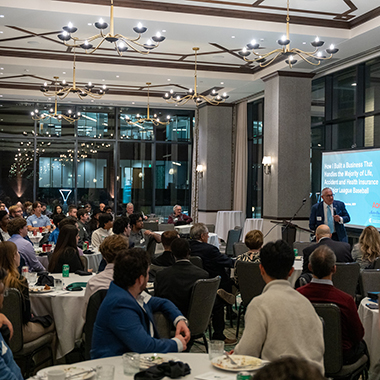
Graduate students from the Department of Statistics and Probability spent their summer as interns with the Institute for Mathematical and Statistical Innovation (IMSI) at the University of Illinois Urbana-Champaign.
Andrews Boahen, Chun-Yi Chang and Rachita Mondal, while working in different research laboratories, were able to use skills developed at MSU to advance various research projects. The three were also able to strengthen their interest in their respective areas as they begin to prepare for life after graduation.

Andrews Boahen
Andrews' internship involved developing sparse structure-aware inference methods for brain connectomics research, with a particular focus on building a Python pipeline for Network-Based Statistics (NBS) and its variants as part of a Fragile X syndrome study.
His work involved developing network-based statistics (NBS) pipelines for multiple testing, working with fMRI data, and data pre-processing. He also read and discussed network-based statistics papers with labmates in neuroscience and bioengineering, joined collaborative lab meetings, and presented his weekly progress.
Andrews said that his work in multiple testing and statistical inference, along with computational statistics, at MSU were the skills that came up most directly during his internship.
“This internship opened my interest in applying my methods to the neuroscience community, Andrews said. “I've become fascinated by learning more about the brain, and I'm currently thinking about how to build a brain digital twin by drawing on my surrogate modeling and uncertainty quantification background for neuroscience research.”
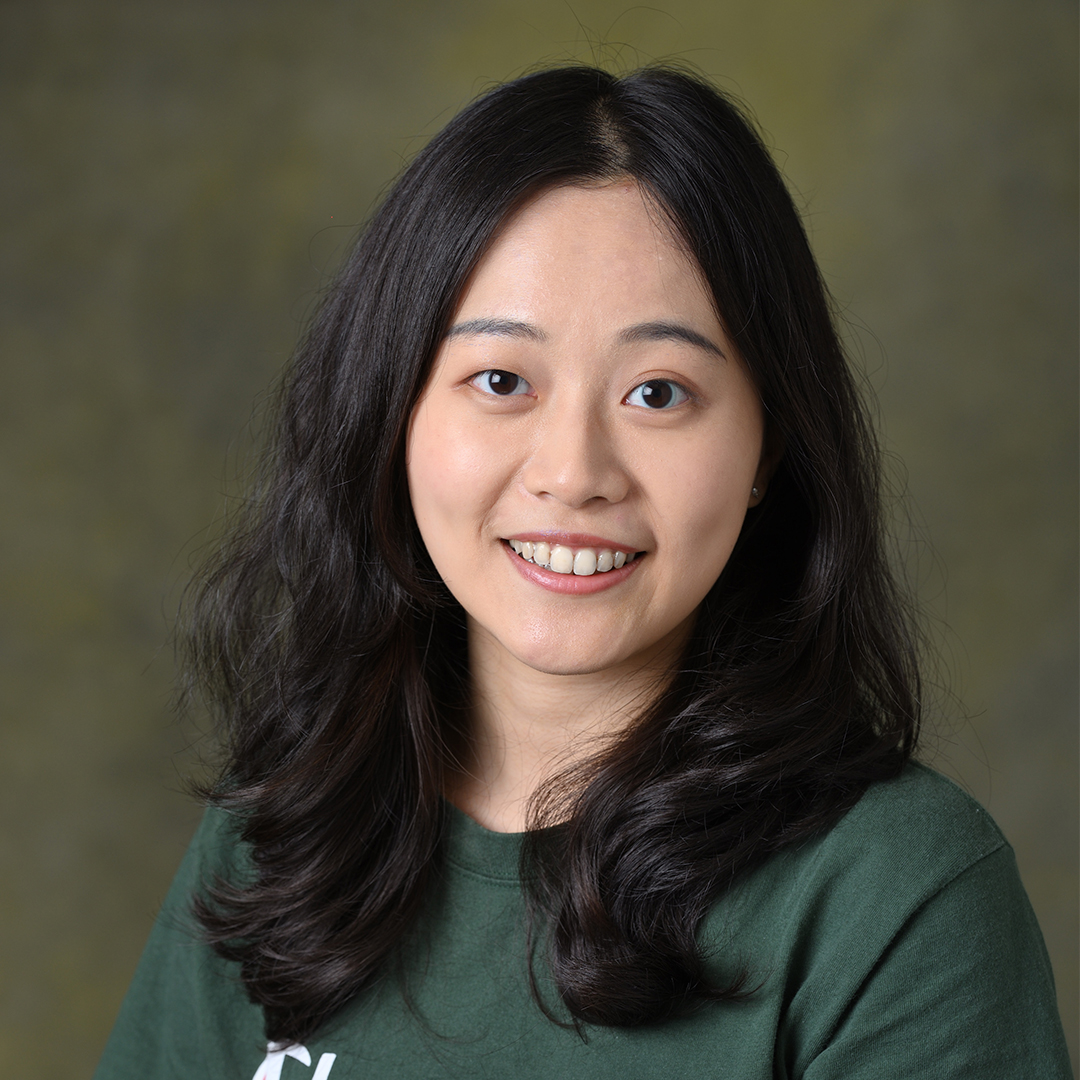
Chun-Yi Chang
Chun-Yi’s internship featured a combination of plant and soil biology, environmental science, and statistics. Her project focused on understanding and predicting soil nitrous oxide emissions, an important source of greenhouse gases. She used field measurements such as soil moisture, temperature, oxygen levels, electrical conductivity, and soil chemical properties.
As part of her work, Chun-Yi analyzed soil emissions data collected through an agricultural field experiment. Her responsibilities included cleaning and organizing environmental and soil data, developing statistical models to identify key drivers of emissions, and evaluating predictive performance, particularly for extreme emission events. She also investigated spatial and temporal patterns to determine where and when additional measurements could be most informative. Throughout the project, Chun-Yi collaborated with the IMSI plant biology research team.
“This experience has strengthened my interest in pursuing an interdisciplinary research career in which statistical methods directly inform scientific and environmental decision making,” she said. “I enjoy translating applied scientific questions into rigorous modeling problems and working closely with domain experts to ensure that the analysis is meaningful. The internship has shown me that I would like my future work, whether in academia, industry, or a research institute, to involve collaborative, data driven projects with tangible real world impact.”
Training in statistical modeling, data visualization, and uncertainty quantification at MSU was especially valuable, according to Chun-Yi. She applied mixed effects models, time series and spatiotemporal methods, and predictive modeling techniques while adapting her approach to a complex scientific dataset. The experience also drew on the communication skills she has developed through teaching and research presentations, as the results of her work must be accessible and useful to collaborators outside the field of statistics.
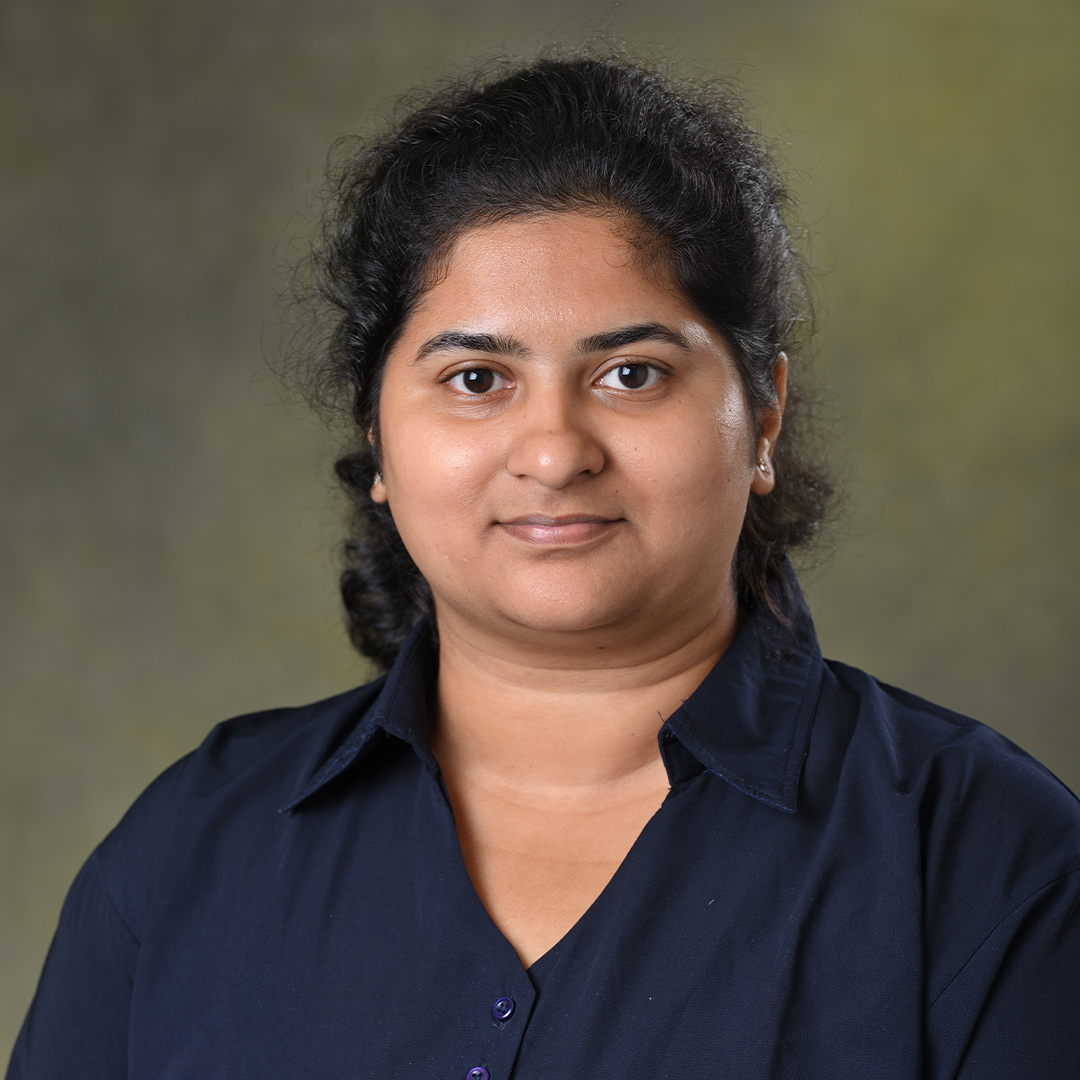
Rachita Mondal
Rachita's internship focused on statistical computing, bioinformatics, data visualization, and scalable methods for analyzing genomic sequence data. In particular, she worked with SARS-CoV-2 sequence data and explored ways to summarize genetic variation over time.
Her work involved developing computational and statistical methods for analyzing large viral sequence datasets. In addition, she worked on efficient methods for computing genetic similarities, visualizing how viral sequences change over time, and developing hierarchical clustering approaches that can handle large numbers of sequences.
"This experience strengthened my interest in developing statistical and computational methods for complex, large-scale scientific data," she said. "It also gave me the opportunity to work on interdisciplinary problems, which is something I would like to continue pursuing in my future research career."
Rachita said that her training in statistics, statistical computing, and high-dimensional data analysis at MSU was especially useful during the internship. She also relied heavily on programming, problem-solving, and the ability to translate statistical ideas into computational methods that can work with large datasets.
- Categories: